Category: Content Reflections

Week 4 Reflection

How Technology Impacts Educational Assessment

The main concept discussed within Bower’s (2019) article is that technology remains a mediator for learning. Specifically, it acts as a bridge between educators and students, making education and knowledge more accessible and personalized to the learner. Technology has proven to have significant benefits regarding educational assessment, but only if it is utilized in accordance with pedagogical practices that enhance learning.

Bower addresses this by discussing that technology is only helpful in assessment when it is used correctly to support learning outcomes. Briefly touching on the Constructivist Learning Theory, it entails that learners must generate or “construct” knowledge through firsthand experience or physical engagement. Technology can support this endeavor through virtual learning, communication, gamification, and more. This only remains in effect when tech is used in “designing [programs, platforms, etc.] for learning” which encapsulates the idea that digital technology can be a tool to reach learning outcomes, rather than the source of learning.

Another concept that I found relevant was how the use of technological affordances can impact student learning experiences. As discussed by Bower’s (2019) the choice of technology or the “fundamental properties of how the thing could be used” can greatly impact how students learn and interact with the presented knowledge. For instance, the delivery of class lectures on virtual platforms (asynchronous or synchronous; for example, prerecorded lectures or zoom lectures) may have differed outcomes of participation, retention, and attention, resulting in varied outcomes. Understanding the goals and objectives of how educators would like students to interact with media is something to consider.

Furthermore, I thought that the concept of feedback in digital learning environments was really interesting. Feedback provides students with an instant identification of educational gaps and builds confidence through virtual teaching presences. This can assist students in identifying learning strengths and weaknesses, mapping where they can improve.

On the other hand, some challenges exist within technology-based educational assessment. With the rise of AI and LLMs, academic integrity and prevention of cheating remain a challenge for educators. Additionally, physical access to technology or limited digital literacy may be a limiting factor. Educators relying on students to gain access to online resources and systems may be problematic for those who cannot afford devices or live in rural areas without internet access.

To summarize, Bower’s technology-mediated learning theory critically analyzes the usage of technology in the classroom. His findings conclude that technology does have the potential to become an extremely powerful tool in relation to educational assessment. If educators ensure that technology supports students and their comprehension (making sure learning outcomes are being met), this will continue to be an impactful method.

I think that this conversation is directly related to learning outcomes #4 and 7. Reading and understanding literature that relates to concepts and theories in open education is crucial for evaluation of tools, methods, and outcomes connected to student success.
Week 3 Reflection

This week, I watched Dr. Irvine’s video lecture regarding modality in University settings. I was really interested in how the delivery of classes impacts students and their ability to learn. To my surprise, Valerie discussed how education and online learning has a variety of formats.

Some of the following include:

  • Face-to-face
  • Hybrid
  • Blended
  • Self paced
  • Multi-access
  • Online

Prior to watching the lecture, I thought that modality in higher ed only included offline and online courses. In other words, based on what I have observed through course registration at the University of Victoria, I have only ever seen courses labelled as online or in-person (this is just my experience, although I know now that other formats are available!).

One thing that Dr. Irvine mentioned is that no one format is better than the other. Oftentimes, people think that offline is better than online, or the other way around. Ultimately, each format of learning supports students differently, based on their learning needs and preferences. Throughout her lecture, she mentioned how different groups tend to have specific preferences benefitting their scenario.

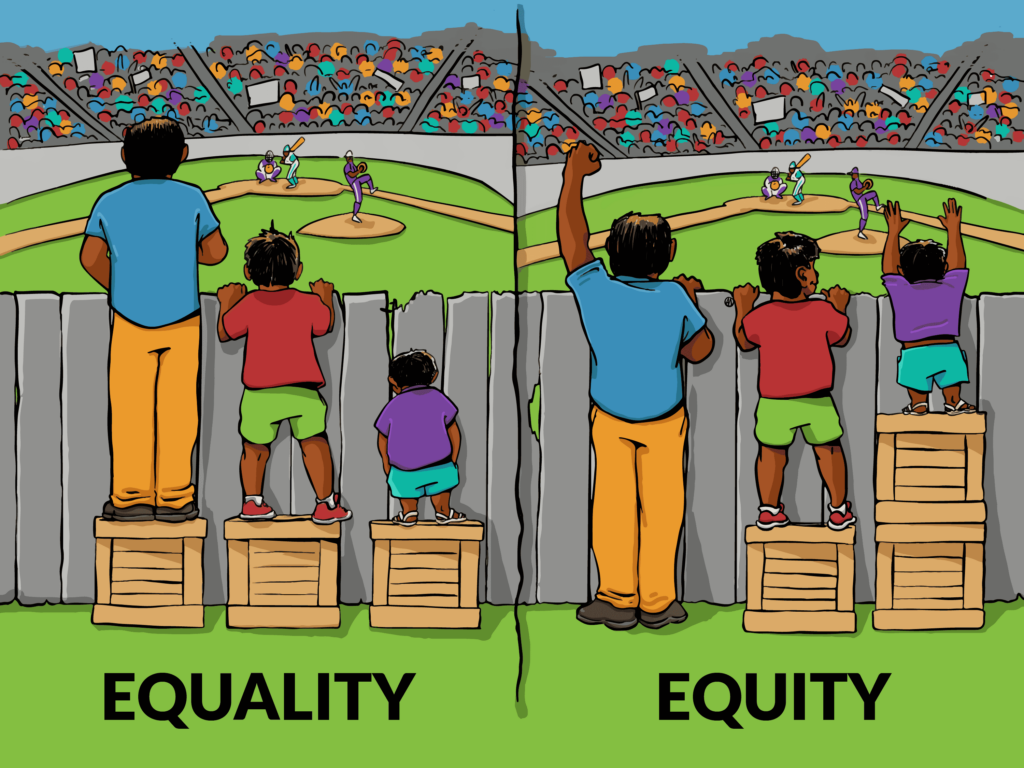
Accessibility in education was a key theme that addressed the reasoning for this. Although it is easy to assume that one form of modality is best for overall learning, this is simply not the case. When we look into each student’s circumstances, specifically things like their schedule, health status, responsibilities, career, etc., we see that there is not “one method that fits all”. This brings up the conversation regarding equality vs equity.

For some learners, they may need one modality format in order to be successful. Ensuring that post-secondary institutions offer a range of course delivery formats is crucial to not only each learner, but the student body as a whole. Flexibility in allows for different people with different goals to be successful.

This made me think about offering classes in a multi-access or online format could be beneficial to those with longer commute times. A course offered in a multi-access format still allows for in-person connection during class, but also provides access online. For a student who struggles to get to campus in a short amount of time, this could be a successful option, giving them the choice of two formats each class.

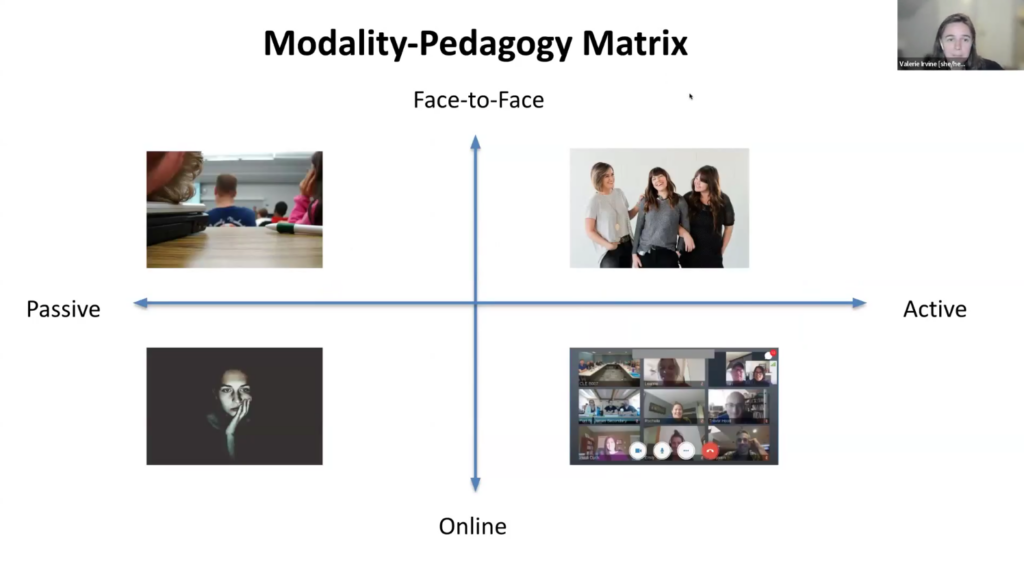
Different modalities also support pedagogy and participation. For instance, with someone that has social anxiety, participating in a face-to-face setting and speaking in front of the class may not be within their comfort zone. For this individual, an online setting could be a more successful modality for them; maybe they feel more comfortable sharing on a Zoom call where it doesn’t feel as intimidating. Supporting modality encourages learners to engage with content and resources in a diverse range of ways. Delivery formats and activities that make one student feel interested and content may be a dread for another.

Education and Modality: How students are engaging with course material vs the course delivery format

I think that the future of education will continue to prioritize modality. Supporting flexibility and accessibility through a wide range of formats will support students in a variety of different circumstances. Ultimately, having a range of modes of modality will lower restrictions students are facing in educational environments, making it more inclusive and better suited to individuals.

As for course learning outcomes, I think that this topic relates mainly to learning outcomes 5 and 6. Understanding how modality can support a variety of learners with different abilities is at the core of this discussion.

Week 2 Reflection

This week in class we learned about FIPPA, privacy, and security. In relation to Health Information Science (my major), these topics are extremely relevant to the field, as the use of information in healthcare is incredibly sensitive, and must be protected. During class, we looked at a few sites that caused us to think about and reflect on how our information is available online.

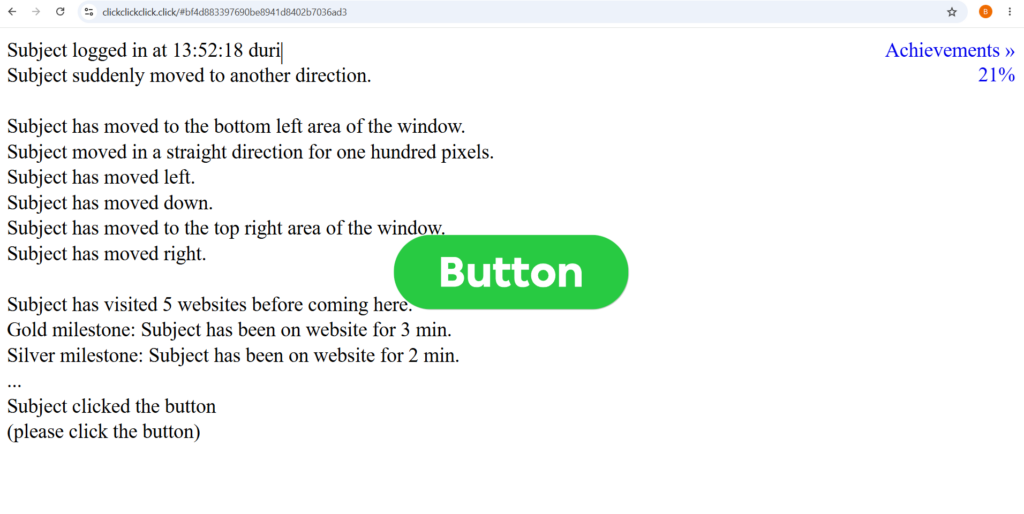
The first site I visited was “clickclickclick.click” which is an interactive website that demonstrates how easy it is for users to be tracked online. Every movement or action I took while on the site and navigating to other sites was either narrated or documented through text. After playing around with this website for some time, I thought that it was quite creepy and incredibly surprising how much of our online behavior is tracked and recorded by websites. This leads me to think about how the input of personal or sensitive information on various sites may not be as secure as we believe it is.

The second site I interacted with was called “Since You Arrived” and similarly to the previous site, it displayed information such as my IP address, location, computer information, and various other statistics. This site represents that the supposed privacy that we encounter through the usage of digital applications and websites is merely an illusion. Most sites have a broad range of access to sensitive information in relation to our devices. One thing that I learned on this website was that when websites use cookies, they continue to have access to our digital activity and information even after you have left the site.

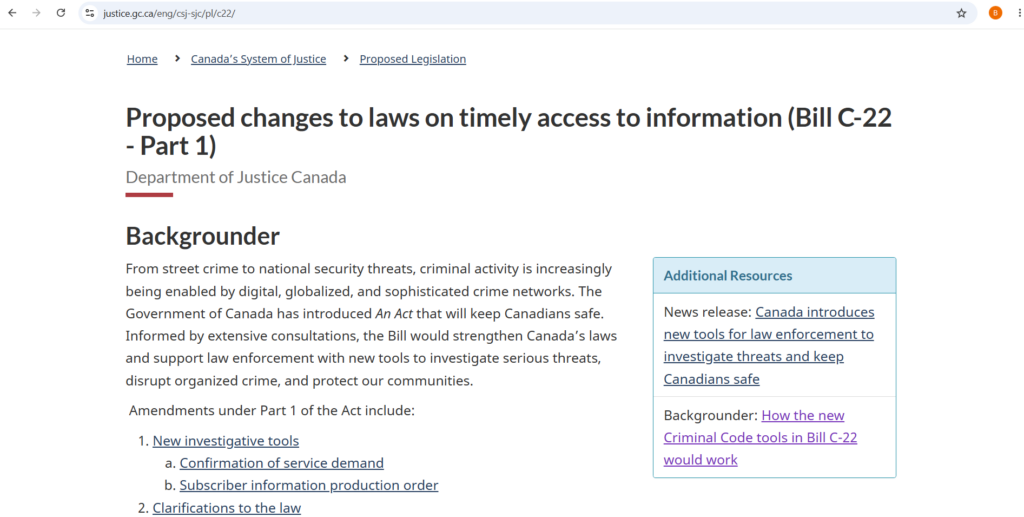
Furthermore, one topic we discussed was the proposed legislation of Bill C-22 in Canada. I thought that this event was incredibly important and interesting. The proposed legislation would allow law enforcement agencies in Canada to have access to private telecommunication data to solve crimes, exploitation, and more. Citizens have become extremely divided, and after researching both sides of the argument, I can understand why this remains controversial.

Overall, I think topics regarding privacy and security are crucial to learn, especially in a course like this. Specifically, this lecture related to the learning outcome regarding privacy; “Familiarity with ethical and legal frameworks around online and open education, including privacy legislation, copyright and Creative Commons licensing” Allowing students and educators to be more informed and empowered while using digital platforms ensures that safety and trust is built within technological environments.