This week, I watched Dr. Irvine’s video lecture regarding modality in University settings. I was really interested in how the delivery of classes impacts students and their ability to learn. To my surprise, Valerie discussed how education and online learning has a variety of formats.
Some of the following include:
- Face-to-face
- Hybrid
- Blended
- Self paced
- Multi-access
- Online
Prior to watching the lecture, I thought that modality in higher ed only included offline and online courses. In other words, based on what I have observed through course registration at the University of Victoria, I have only ever seen courses labelled as online or in-person (this is just my experience, although I know now that other formats are available!).
One thing that Dr. Irvine mentioned is that no one format is better than the other. Oftentimes, people think that offline is better than online, or the other way around. Ultimately, each format of learning supports students differently, based on their learning needs and preferences. Throughout her lecture, she mentioned how different groups tend to have specific preferences benefitting their scenario.
Accessibility in education was a key theme that addressed the reasoning for this. Although it is easy to assume that one form of modality is best for overall learning, this is simply not the case. When we look into each student’s circumstances, specifically things like their schedule, health status, responsibilities, career, etc., we see that there is not “one method that fits all”. This brings up the conversation regarding equality vs equity.
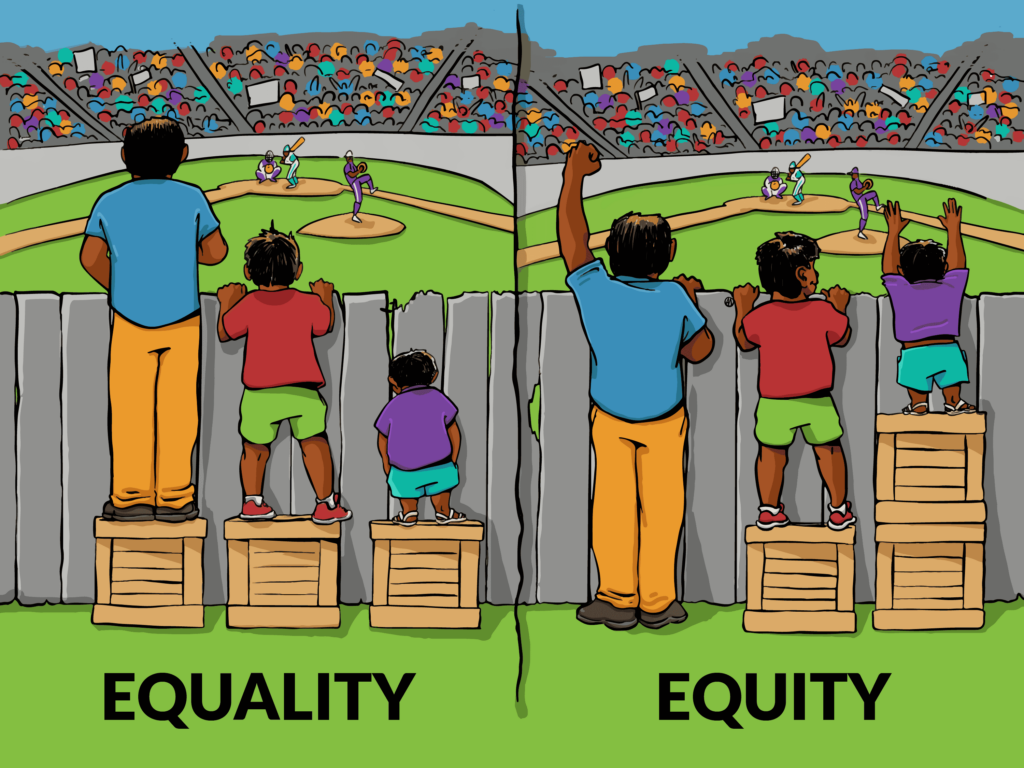
For some learners, they may need one modality format in order to be successful. Ensuring that post-secondary institutions offer a range of course delivery formats is crucial to not only each learner, but the student body as a whole. Flexibility in allows for different people with different goals to be successful.
This made me think about offering classes in a multi-access or online format could be beneficial to those with longer commute times. A course offered in a multi-access format still allows for in-person connection during class, but also provides access online. For a student who struggles to get to campus in a short amount of time, this could be a successful option, giving them the choice of two formats each class.
Different modalities also support pedagogy and participation. For instance, with someone that has social anxiety, participating in a face-to-face setting and speaking in front of the class may not be within their comfort zone. For this individual, an online setting could be a more successful modality for them; maybe they feel more comfortable sharing on a Zoom call where it doesn’t feel as intimidating. Supporting modality encourages learners to engage with content and resources in a diverse range of ways. Delivery formats and activities that make one student feel interested and content may be a dread for another.
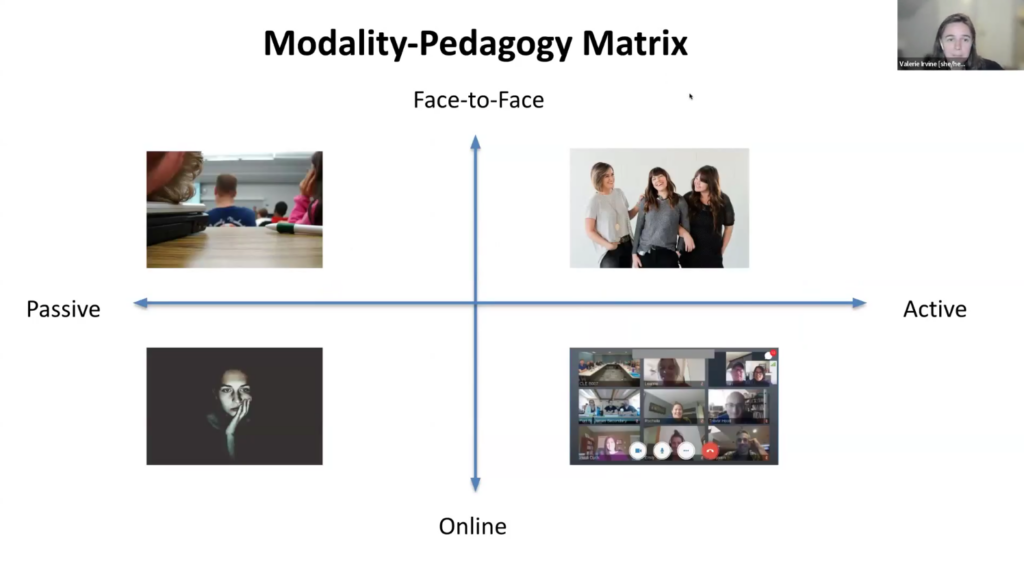
I think that the future of education will continue to prioritize modality. Supporting flexibility and accessibility through a wide range of formats will support students in a variety of different circumstances. Ultimately, having a range of modes of modality will lower restrictions students are facing in educational environments, making it more inclusive and better suited to individuals.
As for course learning outcomes, I think that this topic relates mainly to learning outcomes 5 and 6. Understanding how modality can support a variety of learners with different abilities is at the core of this discussion.
Leave a Reply